
Water in the basement after rain
Damp walls, a wet floor or efflorescence on the block after every storm usually means water is collecting against the foundation instead of moving away from it.
Niko's Equipment Services
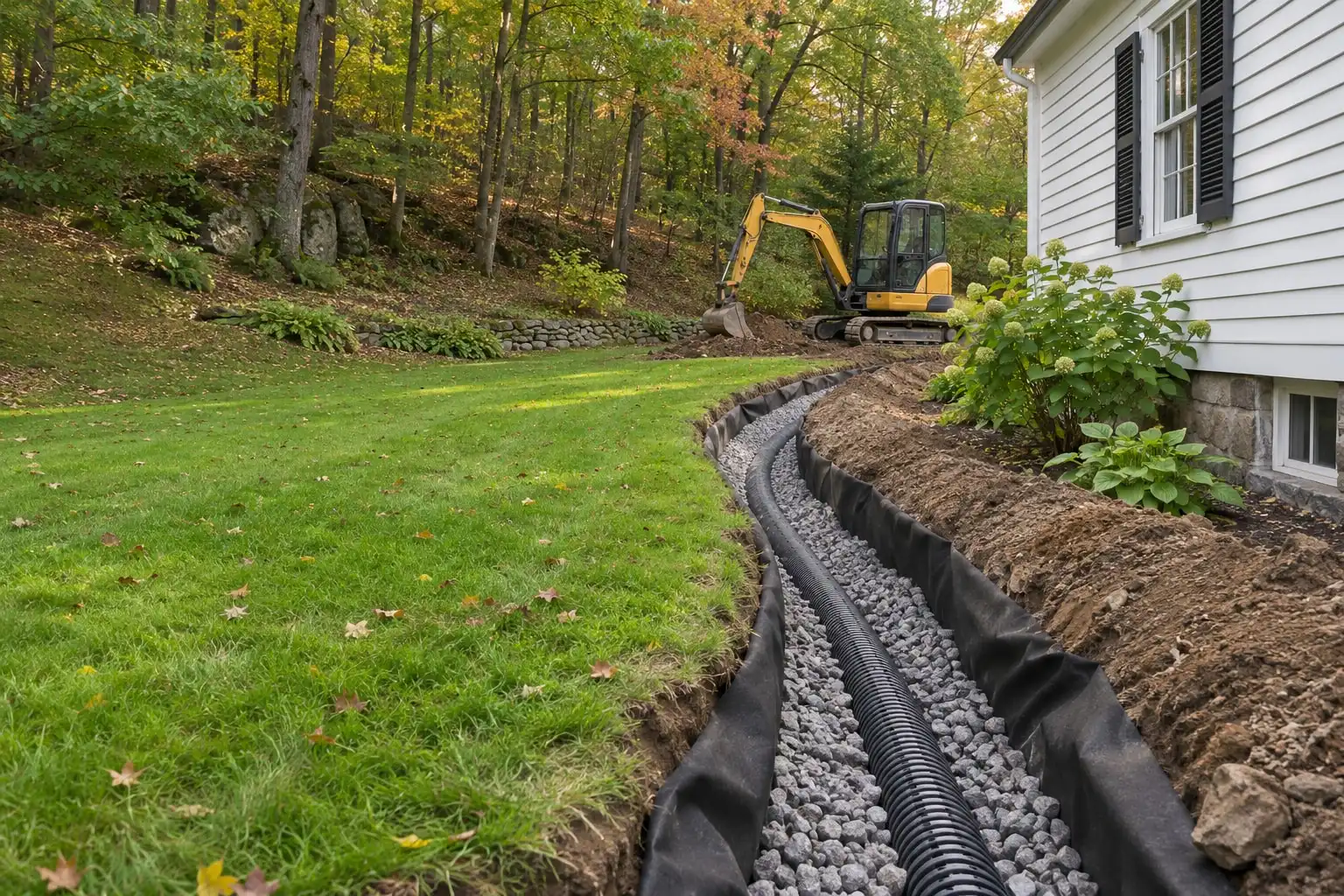
Drainage solutions
French drain, curtain drain and dry well installation, plus regrading that moves water away from your foundation, for homes across Westchester, Putnam, Dutchess, Orange and Rockland counties.
Yard drainage solutions
Wet basements, soggy lawns and driveways that wash out are almost always the same problem: water with nowhere to go. Our job is to find out where it's coming from, give it a path, and finish the yard so you can't tell we were there, apart from the fact that the water is gone.
As an owner-operated excavation contractor, we handle the whole drainage job with our own machines and trucks: the dig, the stone and pipe, the outlet, and the backfill and grading afterward. Because we also install septic systems, we know how to route water around a leach field instead of into it. A typical drainage project includes:
Drainage often goes hand in hand with other excavation and site work, from regrading a back yard to prepping a new build. If the wet spot is your driveway, rebuilding the gravel driveway with a proper base and pitch is usually part of the fix.
Why it matters
Water doesn't fix itself. Every storm it soaks the soil around your foundation, carries topsoil off the lawn and finds the weak spot in a basement wall. The longer it goes, the more it costs: cracked foundations, mold, rotted sills and dead lawns. Spring thaws and heavy summer storms in the Hudson Valley make the problem easy to spot. Watch for these:
Damp walls, a wet floor or efflorescence on the block after every storm usually means water is collecting against the foundation instead of moving away from it.
A low spot that holds water long after the rain stops is a sign the soil can't absorb it and the grade has nowhere to send it.
Grass that squishes underfoot, moss, or bare mud patches often point to groundwater moving downhill through the yard, which is exactly what a curtain drain is built to catch.
Roof runoff released right beside the house soaks the backfill around the foundation. Piping it to a dry well or a daylight outlet takes that load off.
Gullies in the lawn, mulch carried across the walk, or a driveway edge that washes out every spring show where concentrated water is running.
Surface water running onto a leach field can saturate it and shorten its life. Diverting that water is often part of keeping a septic system healthy.
Choosing the fix
The right drainage solution depends on where the water comes from, how the ground slopes, and how well the soil drains. Plenty of yards need two of these working together.
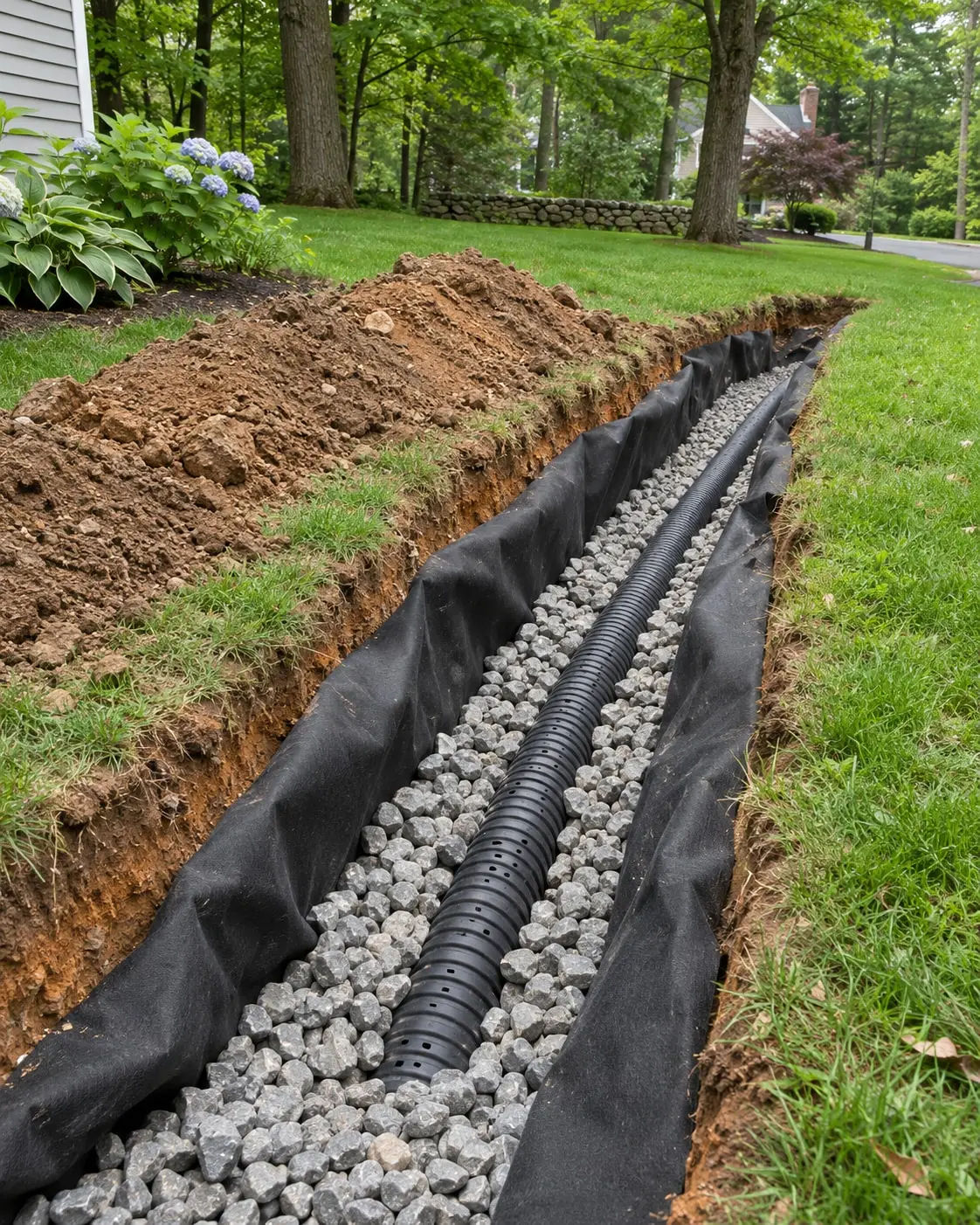
A trench lined with filter fabric, bedded with washed drainage stone and fitted with perforated pipe, pitched so collected water flows to an outlet. It's the standard fix for a wet yard or water pressing against a foundation wall, and the outlet can be daylight on a slope, a dry well, or another approved discharge point.
A shallower french-style drain run across the hillside above the problem area. Instead of collecting water where it pools, it cuts off groundwater and surface runoff coming downhill and sends it around the house, patio or septic field.
An underground chamber or stone-filled pit that takes in water from downspouts or a drain line and lets it soak back into the ground slowly. Dry wells make sense where the lot is flat or there's nowhere downhill to send water. Soil matters here: we dig a test hole first to see how the ground drains.
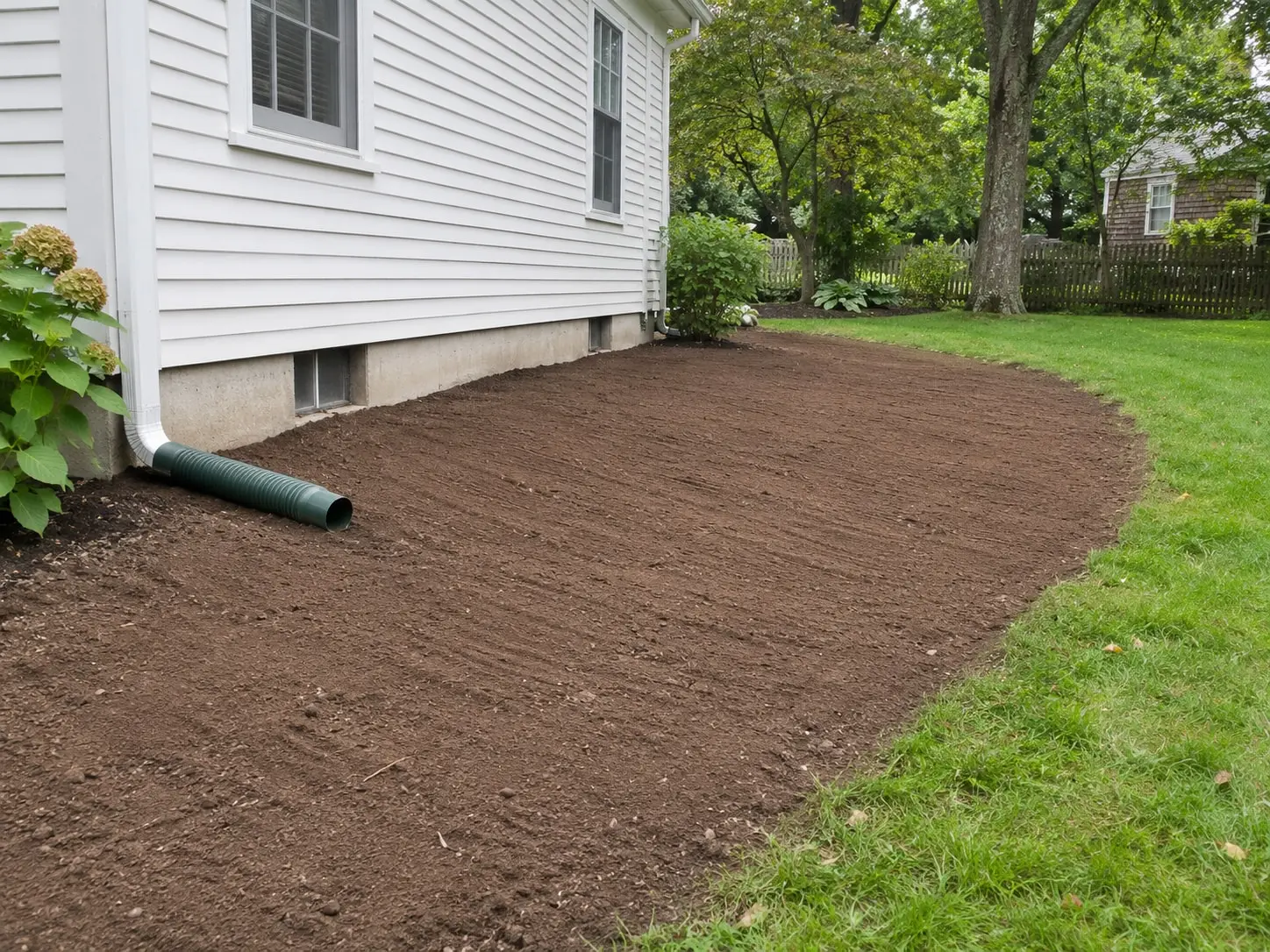
Sometimes the cheapest fix is the right one. Reshaping the yard so the ground falls away from the house, or cutting a shallow grassed swale to carry runoff around it, can solve the problem without any pipe at all.
Our process
Five steps from the first site visit to a dry yard, with the plan agreed before the machine moves.
We walk the property, ideally after a rain or with your photos of one, to find the source of the water, the low points, and every possible outlet.
You get a free written estimate naming the fix (drain, dry well, regrade or a combination), the route, the outlet and the restoration.
Underground utilities are marked before any digging, and we lay out the drain route around septic components, trees and hardscape.
We excavate the trench or pit, set fabric, stone and pipe to a steady fall, and connect downspouts or the outlet so water keeps moving.
The trench is backfilled, topsoil spread and the surface graded so it sheds water. Then we walk the finished job with you.
What it costs
Every yard drains differently, so we don't quote drainage over the phone. Send a few photos and a short description; we respond within one business day to set up a site visit. You get a free written estimate with the fix, the route and the restoration spelled out.
Request a Free EstimateHow many feet of drain the problem needs, and how deep it has to go to intercept the water.
A wet corner and a hillside of runoff call for very different pipe, stone and dry well capacity.
Clay, boulders and ledge slow digging and affect how well a dry well can drain.
Open yards take a larger machine; fenced or tight yards mean compact equipment and more hand work.
Where the water goes, plus stone, pipe, fabric and any dry well chamber the design needs.
Hauling excess soil, topsoil and seed, and any town permit or inspection the job requires.
Water where it shouldn't be?
French drains, curtain drains, dry wells and regrading across the Hudson Valley. Tell us where the water sits and we'll come take a look.
FAQ
Both use a gravel-filled trench with perforated pipe. A french drain collects water where it is causing a problem, such as along a foundation or in a low spot. A curtain drain is set across a slope above the problem area to intercept water before it gets there. Many properties in the hilly parts of the Hudson Valley benefit from a curtain drain upslope of the house.
A dry well is a good fit when the property is flat or there is no downhill spot to send water, and when the soil drains well enough to absorb it. We dig a test hole to check the soil before recommending one. In heavy clay, a dry well may need to be larger or paired with another outlet.
Sometimes. If the ground around the house is flat or slopes toward the foundation, regrading so it falls away can make a big difference. If water is coming in from groundwater or from uphill, regrading usually needs to be combined with a french drain or curtain drain.
Many residential drainage jobs do not, but it depends on the town, how close the work is to wetlands or a stream, and where the water will discharge. We will tell you what your project needs during the site visit, and every dig starts with a utility markout.
Not when it is planned around it. A drain in the wrong place can push water toward a leach field, so we locate the tank and field first and route drainage away from them. Done right, drainage usually protects a septic system by keeping surface water off it.
Service area
French drain and dry well installation across Westchester, Putnam, Dutchess, Orange and Rockland counties. If your town isn't listed, call anyway.
Yorktown · Bedford · Pound Ridge · Lewisboro · Somers · North Salem · Cortlandt · Mount Kisco
Carmel · Mahopac · Brewster · Patterson · Kent · Putnam Valley · Cold Spring · Garrison
Beacon · Fishkill · East Fishkill · Wappinger · LaGrange · Pleasant Valley · Hyde Park · Rhinebeck
Newburgh · New Windsor · Cornwall · Goshen · Monroe · Warwick · Chester · Montgomery
Clarkstown · Ramapo · Orangetown · Stony Point · Haverstraw · Suffern · Nyack · Pearl River
Free estimate
Describe the wet spot and include the property address. We respond within one business day, or call (845) 415-0464.