
Slow drains or sewer backups
Multiple fixtures backing up at once — or sewage rising into a basement floor drain — usually means the tank is full, the line is blocked, or the field can't accept any more effluent.
Niko's Equipment Services
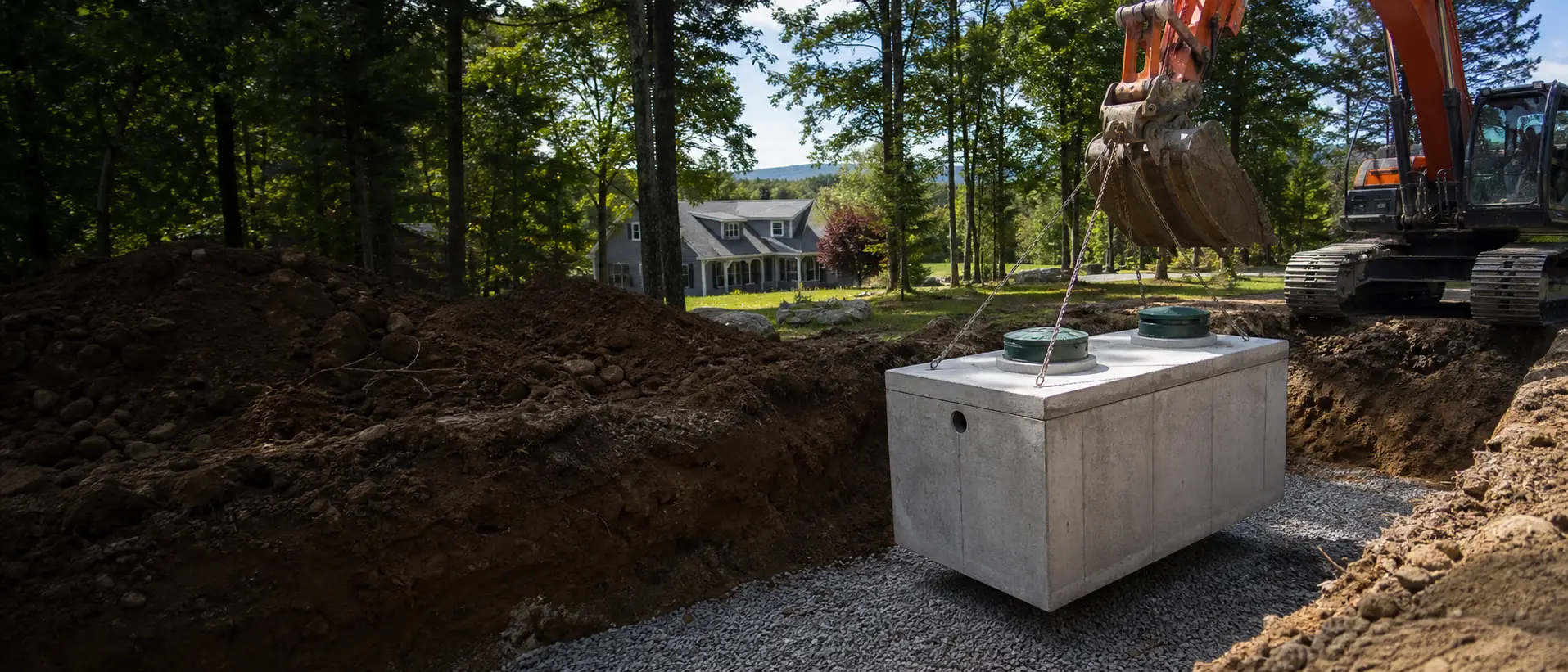
Septic services
Full septic system installs, leach-field replacements, repairs and inspections — from the perc test to the final grade. Permits handled, inspections coordinated, sites finished clean.
Septic services
When a septic project goes sideways it's almost always at the boundary between trades — the excavator dug too deep, the plumber needs a re-set, the engineer's stamp doesn't match the field. We do the dig and the install, so the boundary is just us. Less coordination, fewer surprises, one accountable crew.
Whether you're replacing a failing system on a property you've owned for thirty years or installing the first septic on a new build, we'll bring a real plan, real iron, and a real finish.
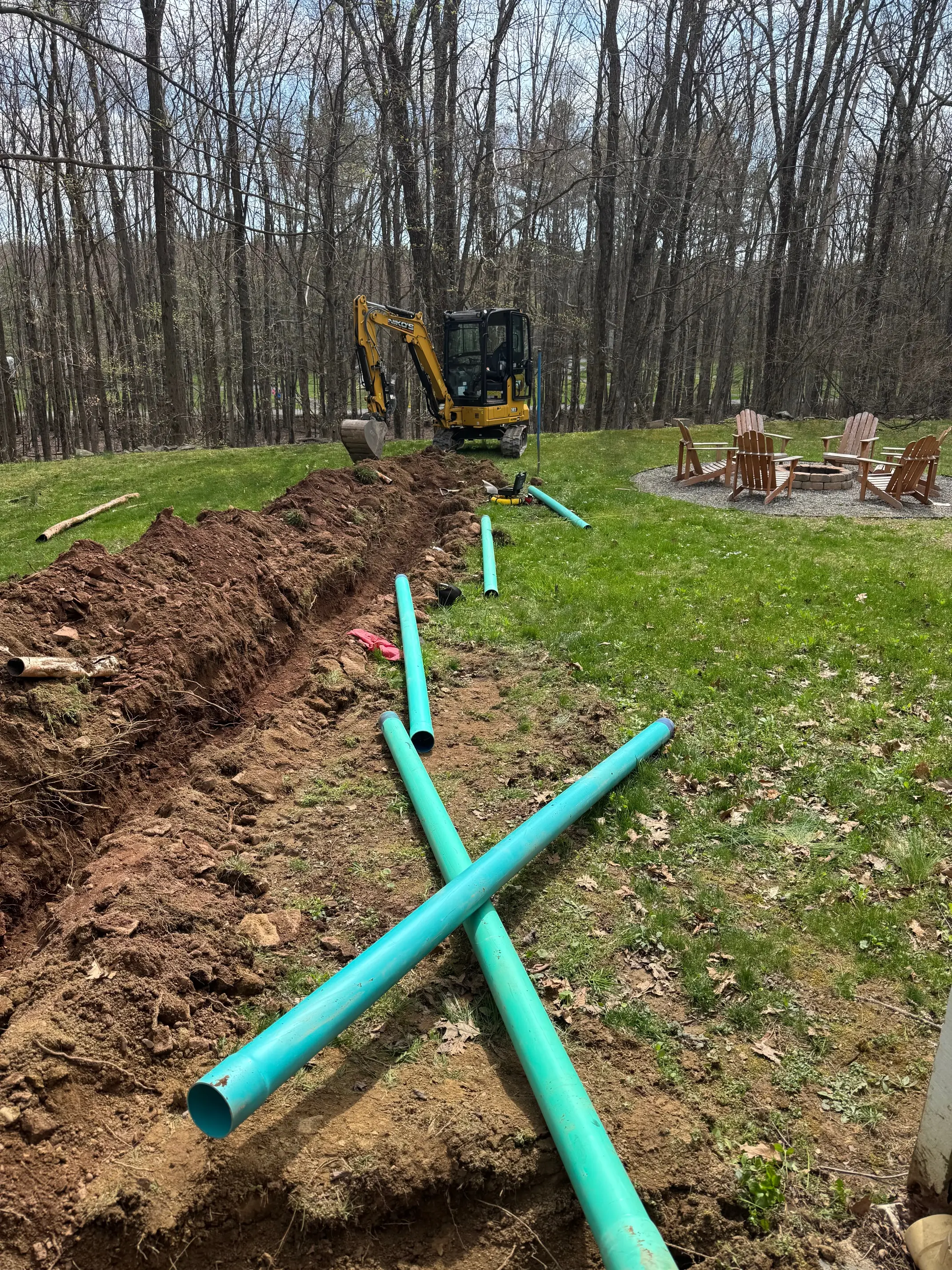
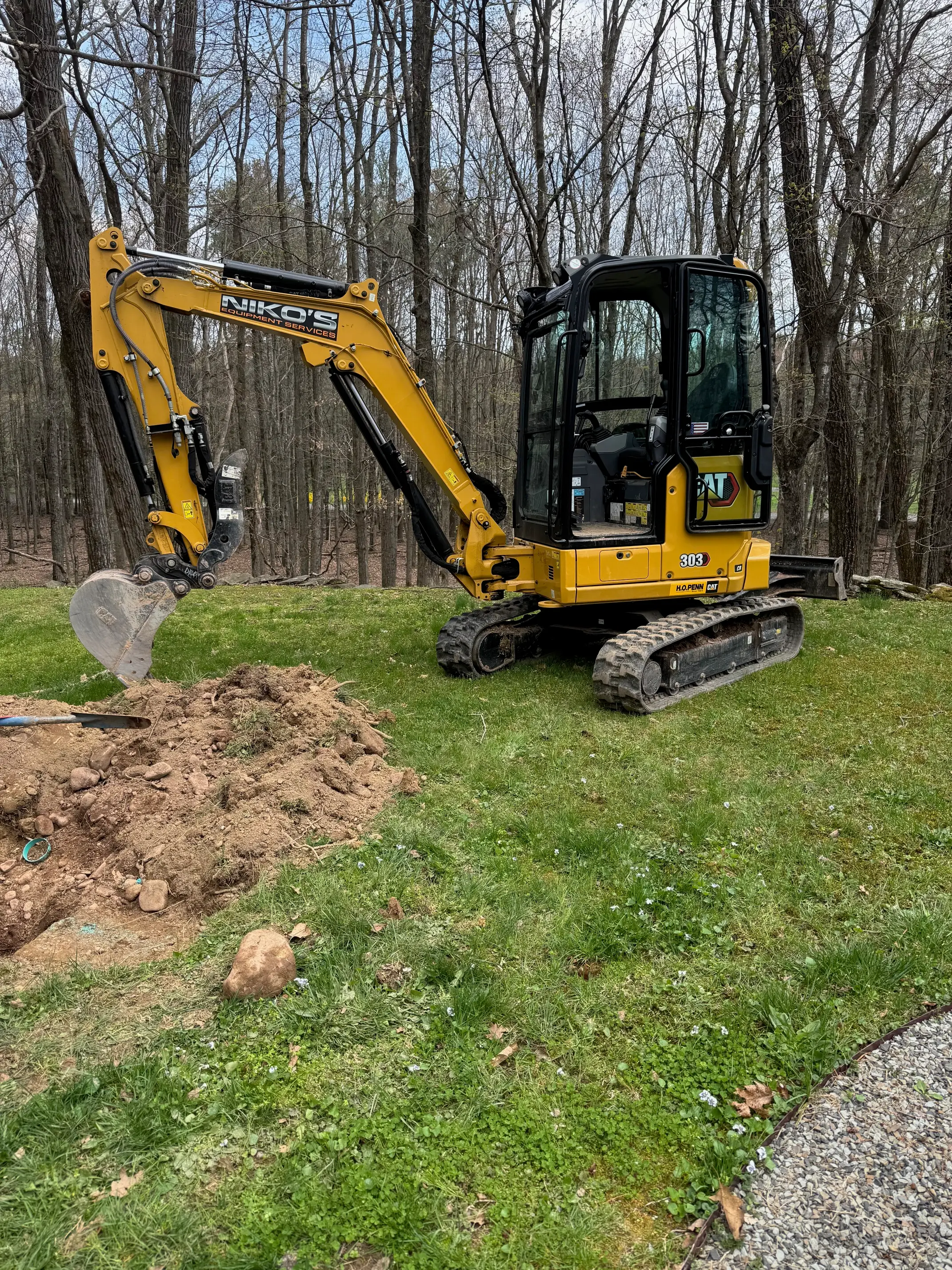
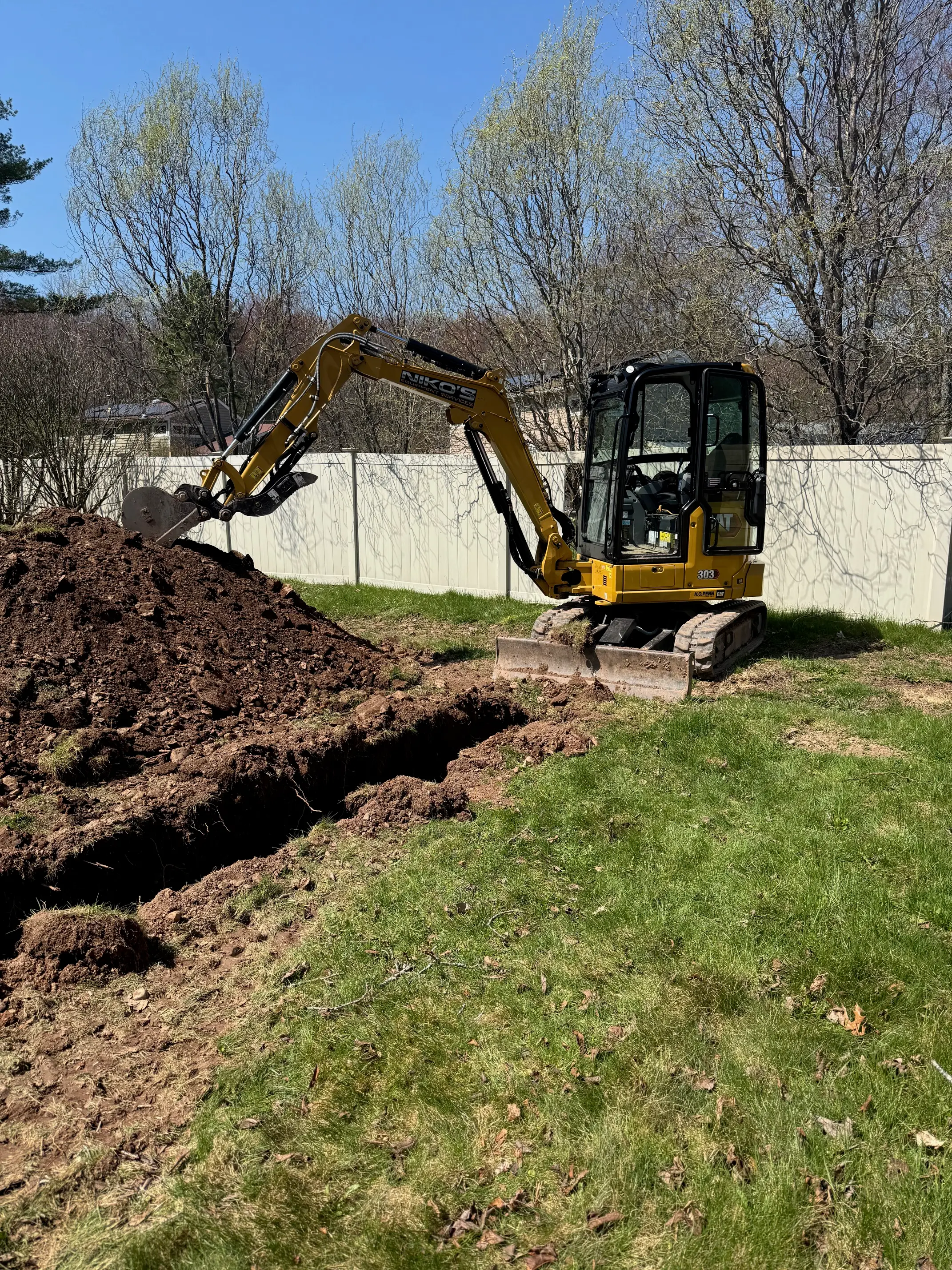
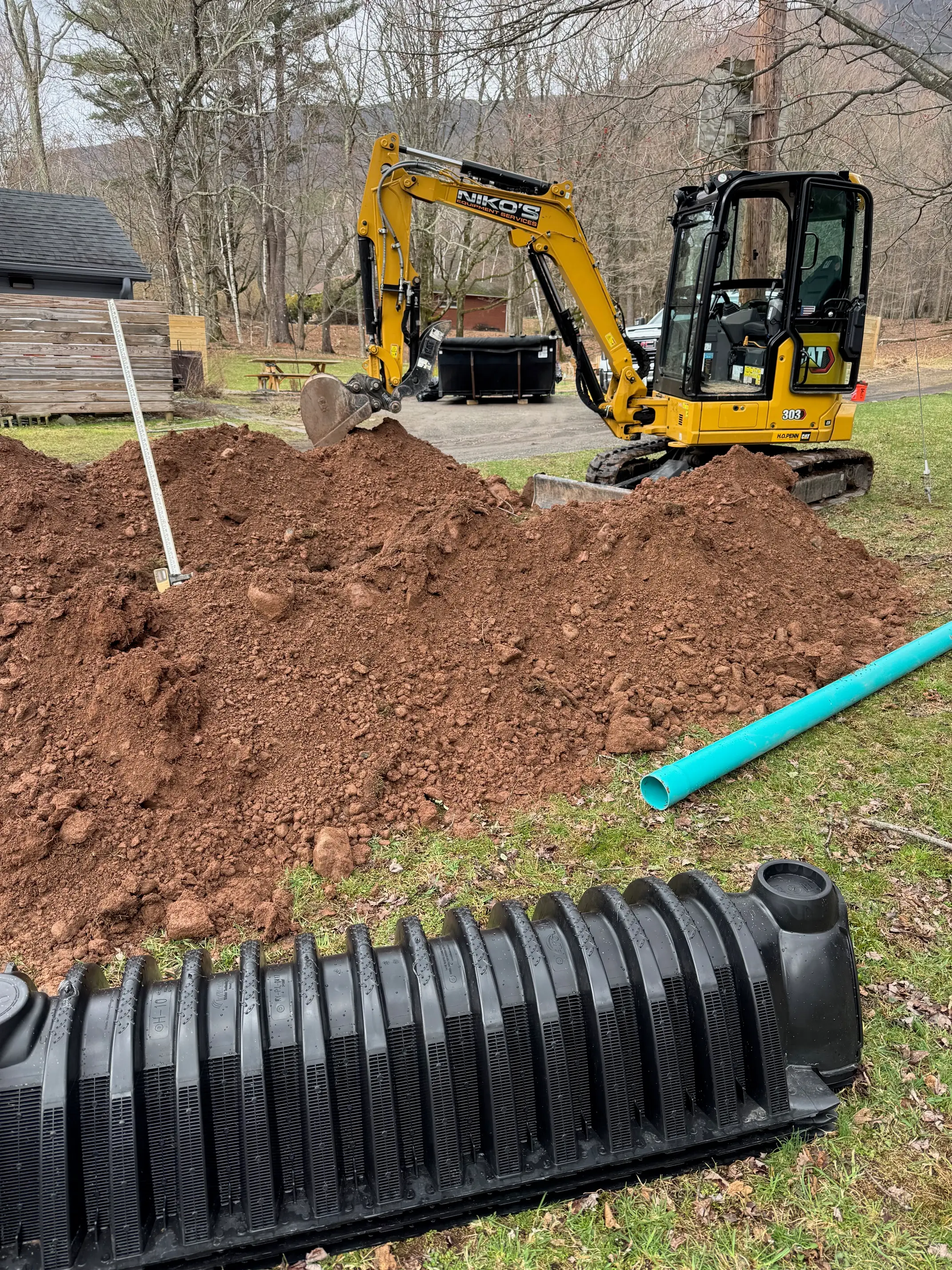
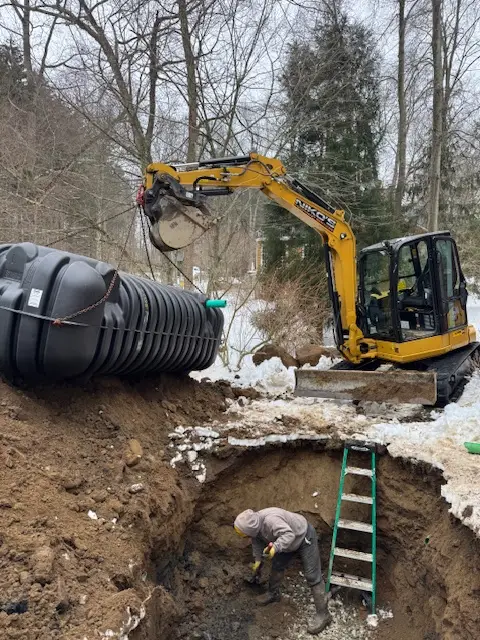
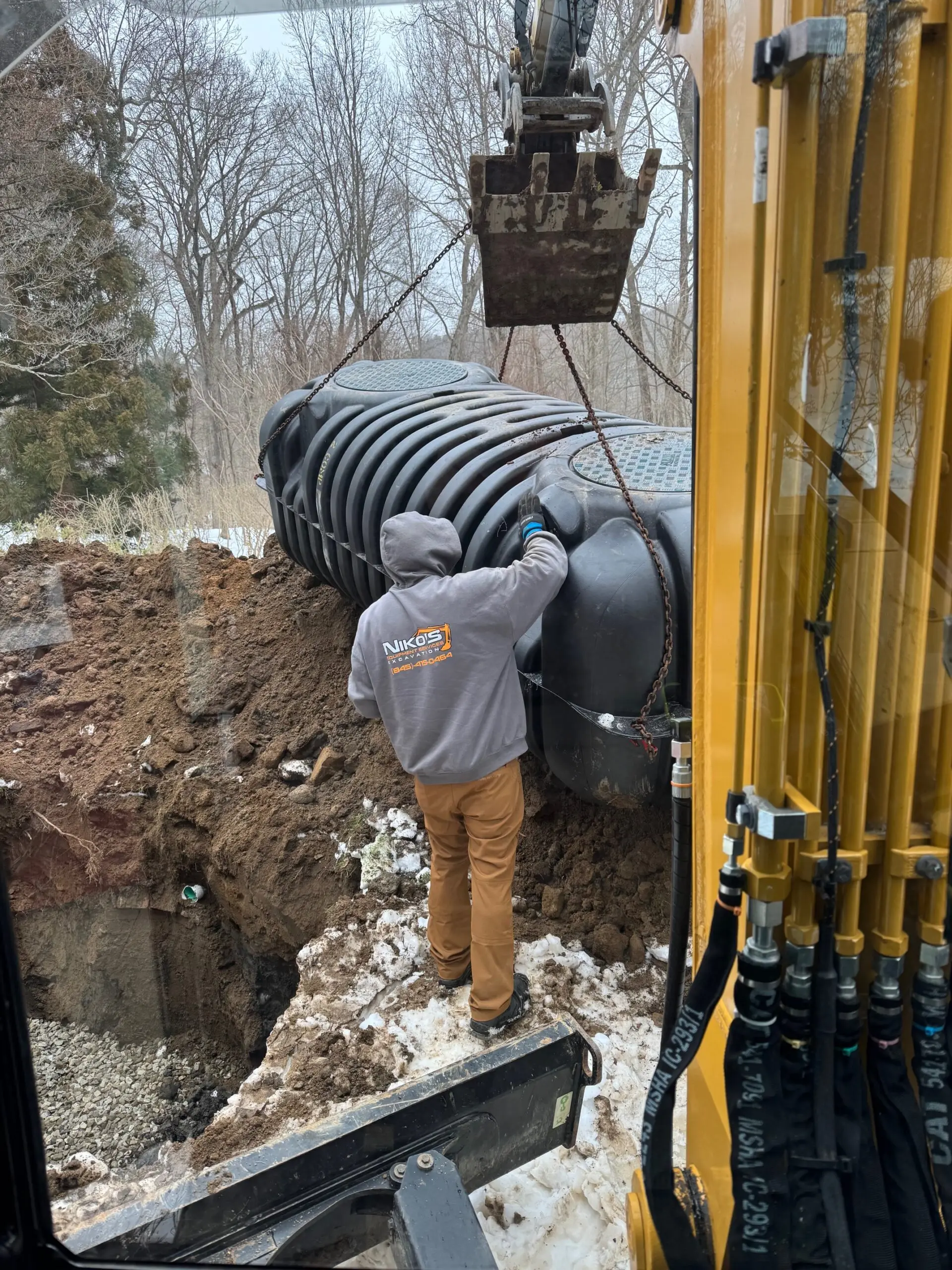
Signs of trouble
Septic problems almost never get better on their own. Caught early they're a service call; left long enough they're a replacement. Here's what to watch for — and when to pick up the phone.
Multiple fixtures backing up at once — or sewage rising into a basement floor drain — usually means the tank is full, the line is blocked, or the field can't accept any more effluent.
A bright green, soft patch of grass over the leach field isn't a fertilizer win — it's effluent surfacing where it shouldn't. That's a failing field, not a healthy one.
A working septic doesn't smell. If you can smell sewage near the tank lid, the drain field, or downhill from either, something is venting that shouldn't — and that usually means a repair before it becomes a replacement.
Gurgles from one drain when another is running often point to a vent or main line problem tied to the septic. Catch it early and it's a service call; catch it late and it's a new system.
Pump systems and advanced treatment units have alarms for a reason — they give you a head start before things back up indoors. Call us the moment one activates.
Routine pump-outs every 3–5 years are the cheapest way to add decades to a system's life. If you don't remember the last one, schedule it — and have us look at the rest of the system while we're there.
What's included
Most septic jobs aren't just one piece of work — they're an excavation, a plumbing job, a permit process, and a restoration job stitched together. Here's the full scope of what we cover under one quote.
Request a QuoteComplete septic system installation (tank + leach field)
Failed system replacement & retrofits
Distribution box repair & component replacement
Tank pumping coordination & inspections
Percolation tests & site evaluation
Septic permit pulls & BoH coordination
Excavation, grading & restoration after install
Drainage corrections around existing systems
Need septic work in the Hudson Valley?
Free estimates across the Hudson Valley. We respond to every request, fast.
Why us
Late-model excavators and dump trucks mean we don't ghost your project waiting on a part.
BoH permits, perc tests, design coordination — handled. You get a folder, not a homework assignment.
Topsoil, grade, rake, walk-through. We don't leave you with a moonscape.
Our process
One crew start to finish. No day-of phone tag, no "hidden costs" line on the invoice.
Most septic projects start with a phone call and end with a homeowner who never had to chase a permit, a soil report or a sub-contractor. We work the whole job in that order — walk the site, read the soils, slope and setbacks, and send a real written estimate within 24 hours of the visit.
For new installs we coordinate the engineered design and pull the septic permit through your local Board of Health ourselves, so the paperwork doesn't land on your desk. When the permit clears, our own crew and our own iron set the tank, build or repair the leach field, plumb the distribution box, and pressure-test the lines as the design requires.
When the work is finished we coordinate the BoH inspection, re-grade the disturbed area, and topsoil the site so it's ready for sod or landscaping. Same crew, same accountability, from the first walk to the final rake.
What it costs
Every septic job is different, which is why we don't post fixed prices — there's no honest range that covers a simple D-box repair through a fully-engineered mound install. What we promise is a real written estimate within 24 hours of the walk-through, and the number on the estimate is the number on the invoice.
Request a Free EstimateBedroom count drives required capacity. A three-bedroom system has a smaller tank and shorter leach field than a five-bedroom — the difference shows up on every line of the quote.
Perc results, depth to bedrock, slope and water table all dictate the design. A property that perc's well is the cheapest scenario; tight soils, high water table or rock add scope fast.
Gravity-fed conventional systems are the lowest cost. Pump systems, mound systems and advanced treatment units each add design fees, additional components, and a longer install.
Each county sets its own septic permit and inspection schedule. Putnam, Westchester, Dutchess, Orange and Rockland all run different numbers — and those costs pass through directly to the estimate.
A wide-open back yard is one cost. A tight side-yard between a deck and a property line, or a driveway too narrow for a tri-axle, is another. We read access on the walk-through and price accordingly.
Rough-graded and walk-away is the lowest cost. Topsoiled and seeded is more. Full sod, replanting and irrigation reconnect is more still. You pick the finish; the quote follows.
Five counties
We work residential and commercial septic across Westchester, Putnam, Dutchess, Orange and Rockland counties — from rural new builds with virgin soil to dense suburban replacements where every neighbor's driveway is on the truck route.
FAQ
The most common signs are slow drains across the whole house, soggy or unusually green patches over the leach field, sewage odors in the yard, gurgling fixtures, or a septic alarm activating. Caught early, most of these are repairs; caught late, they usually become full replacements.
It depends — soil conditions, system size, county permit fees, design type and site access all move the number, and the spread between a simple repair and an engineered mound install is too wide to publish honest ranges. We walk the site for free and send a written estimate within 24 hours. That number is the number, barring scope changes we agree on together.
A standard residential install — tank set, leach field built, lines connected and inspected — runs three to five working days for most properties. Soils, weather and BoH inspection lead times can shift that, and we'll keep you in the loop the whole time.
Some disturbance is unavoidable in the work zone, but we plan access carefully, protect what we can, and restore the disturbed area with topsoil and rough grade when we're done so it's ready for sod or seeding.
Yes — we're used to working from third-party engineered designs and coordinating directly with your local Board of Health on permits and inspections. We can also recommend engineers we've worked with if you don't already have one.
If the leach field is saturated or surfacing, the answer is usually replacement. If there's a localized failure (a broken line, a failed D-box, a tank issue), repair is often enough. We'll tell you straight which one it is — and we won't up-sell you to a full replacement when a repair would do.
Free estimate
Failing system? New build? Inspection? Tell us what's going on and we'll respond within one business day.